
New Forest Dental Implant Office logoBook

Implantology

What we do —and how the visit sequence runs.

Three categories of implant work, all planned alongside the ceramic laboratory from the first consultation. Treatment plans are written so you know exactly what each visit involves and what it costs before you commit.

Single tooth implants

Single tooth

Single tooth implants

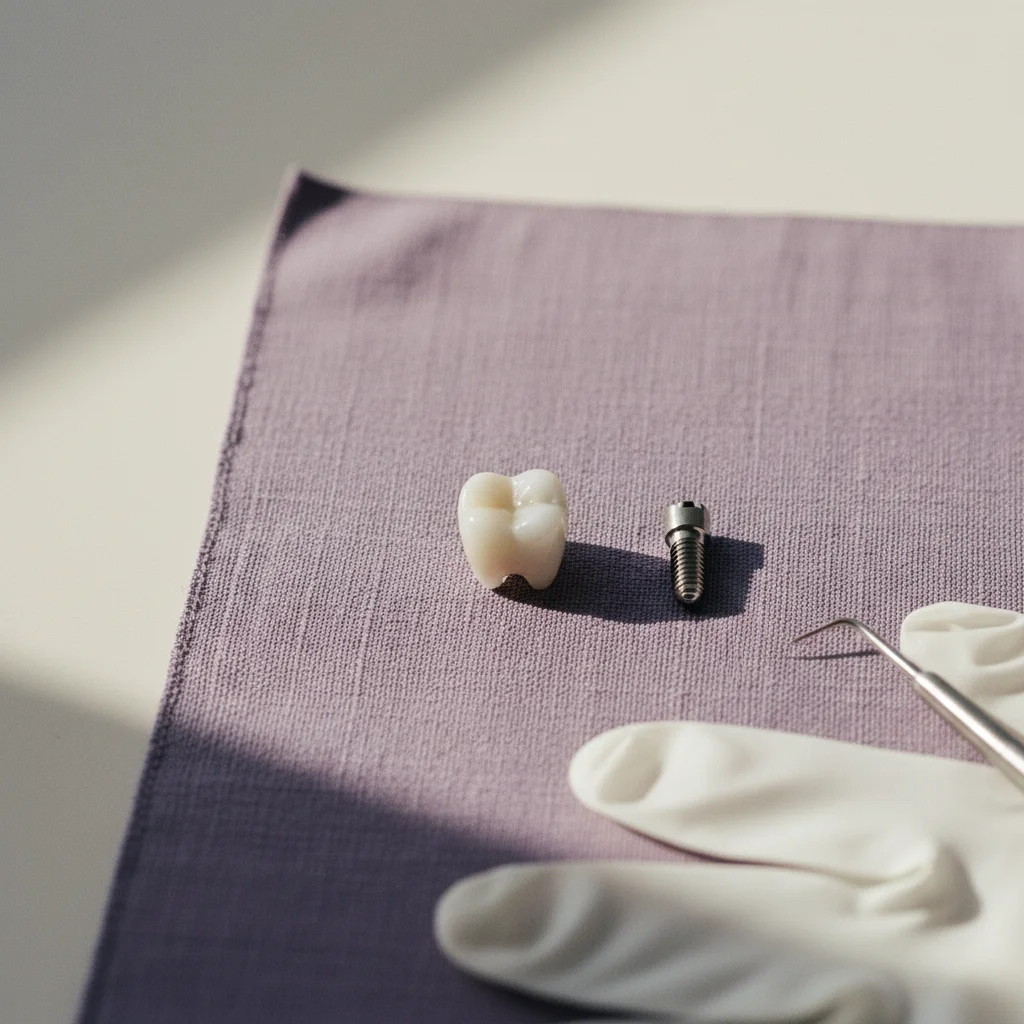
Replacing one tooth with a titanium implant and a crown shaped, shaded and finished in our on-site lab.

When a single tooth is missing or failing, an implant restores both the function and the appearance without touching the neighbouring teeth. The procedure is planned digitally, the implant placed under local anaesthetic, and the final crown built by the laboratory team in the same building. Patients typically come in for the consultation and CBCT scan, the placement appointment, then a small number of follow-ups while the implant integrates before the crown is fitted.
Multiple implants & implant bridges

Multiple teeth

Multiple implants & implant bridges

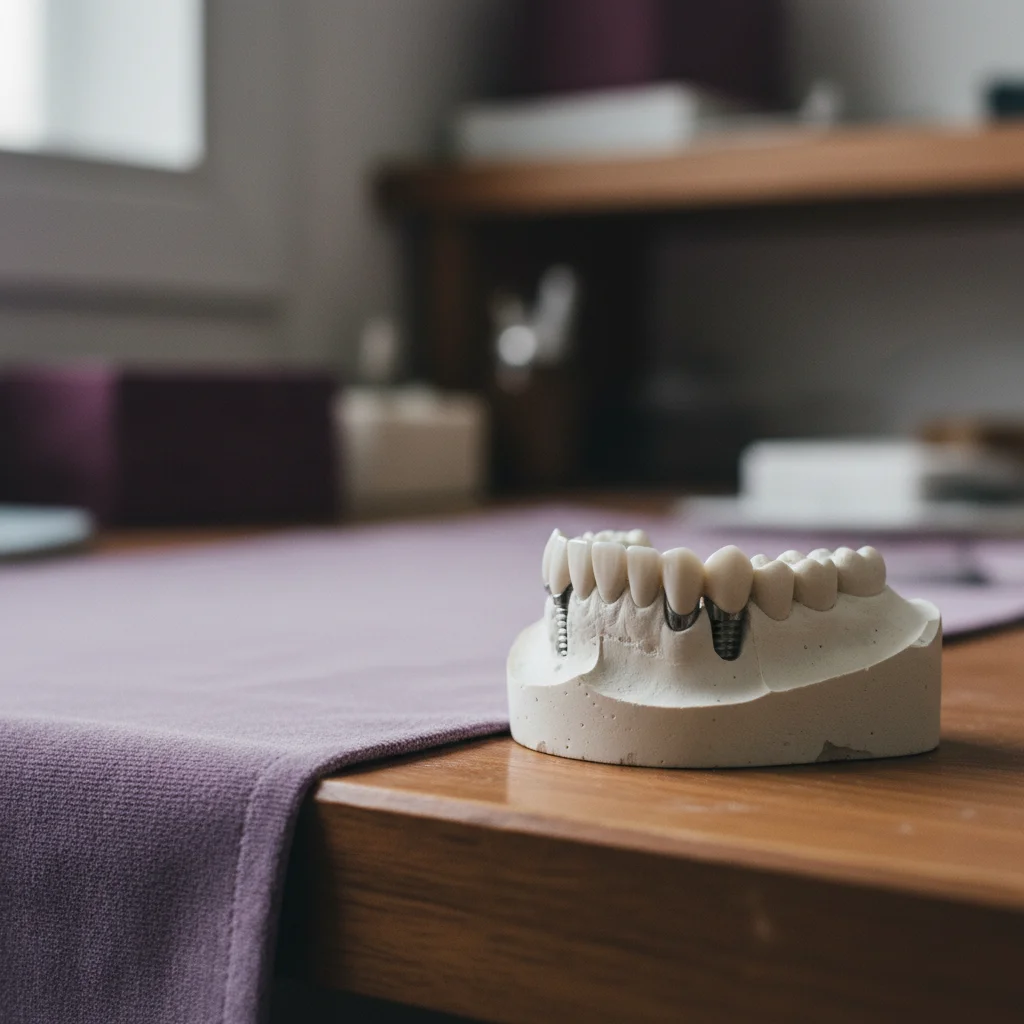
Two or more adjacent teeth replaced with a sequence of implants or an implant-supported bridge, restored in custom ceramic.

Two missing teeth in a row may be replaced with two implants, or a bridge supported on two implants — depending on bone, bite and aesthetic considerations. Larger gaps are reconstructed with implant-retained bridges. Treatment plans are written so the patient can see exactly what each visit involves before any surgery is booked. The on-site laboratory means the bridge is shaped and tried in by the technician working alongside the surgeon, not posted between buildings.

Full arch

Full-arch rehabilitation

Restoring an entire upper or lower arch with a fixed bridge supported on four to six implants — the alternative to a removable denture.

For patients who have lost most or all of the teeth in one arch — or whose teeth are failing one after another — a full-arch implant bridge offers a fixed, stable result. The arch is supported on four to six implants and finished as a single ceramic prosthesis. The clinical workflow is planned alongside the laboratory, with the prosthesis built and finessed in the same building rather than couriered to a third-party ceramicist. We'd discuss specific protocol naming (immediate-load, two-stage, etc.) on a discovery call.

Dental laboratory

Our own ceramic laboratory, on site.

Most implant practices send the technical work out — different building, different city, different ceramicist for every case. We don't. The lab that builds your crowns, bridges and full-arch restorations sits inside the same surgery, working alongside the clinical team. Shorter timelines, fewer surprises, and a single point of accountability for the finished result.

One team, one building

The clinical and ceramic teams discuss every case in person.

Shorter timelines

Lab work is not couriered between cities for each fitting.

Custom shade & form

The technician can meet patients directly when shade-matching.

One point of accountability

No finger-pointing if a remake is needed — same team, same roof.

Visit sequence

What a typical implant journey looks like.

  1. 1. Consultation & CBCT scan

    An hour with Dr Loukas to assess the case, take 3D imaging, and discuss whether implants are the right answer at all. You leave with a written treatment plan and a clear price.

  2. 2. Planning visit (where needed)

    More complex cases — multi-implant, full arch, aesthetic-zone work — get a second appointment with the laboratory technician present, so the prosthesis is designed before any surgery is booked.

  3. 3. Surgical placement

    Implants placed under local anaesthetic in the on-site surgery. Most patients drive themselves home; some choose to stay locally overnight.

  4. 4. Integration & temporaries

    A healing period (typically 3–6 months) while the implant integrates with the bone. Temporary prostheses keep day-to-day life normal.

  5. 5. Final restoration

    The ceramic crown, bridge or arch is fitted by the same surgeon, finished by the same lab team that planned it. Adjustments are made in person rather than couriered.

  6. 6. Hand-back & maintenance

    Patients referred by their general dentist are returned to that practice for ongoing maintenance. Direct patients can join our maintenance recall.

The next step

Talk to the team about your case.

Whether you're a patient considering implants or a dentist referring a complex case — a short call is the cheapest way to work out whether we're the right practice.